August 7, 2026
Miami Spice by the Numbers: 390 Restaurants, 25 Years, and What the Data Actually Says
Miami Spice 2026 has been extended through October 31. Not every restaurant is taking part in October, so confirm before you book. See the full participant list and how Miami Spice works.
Miami Spice is usually described in adjectives. Huge. Beloved. A tradition. The Greater Miami Convention & Visitors Bureau says "more than 300 restaurants" and everybody nods.
We wanted the actual arithmetic. So we took the official 2026 participant list — 390 listings, 389 unique restaurants once you drop a duplicated entry — matched every one against our directory, and counted. What follows is Miami Spice as a spreadsheet: where the restaurants are, what they cook, how good they are, how many are chains, and how the whole thing has grown since about fifty restaurants signed up in the summer after 9/11.
A quick note on the three numbers you'll see. 390 is listings on the bureau's page. 389 is unique restaurants. 386 is the number we can pull ratings, cuisine and price data for — the difference is a handful of rooms too new or too obscure to have a full record. Each stat below says which base it uses.
The Growth Curve: About 50 to 389 in 24 Years
Miami Spice launched in August 2002. The bureau now says 56 restaurants took part; founder Steven Haas remembers 54; the New Times critic who covered it counted "50-odd."
The climb since, from bureau reports and contemporaneous coverage:
- 2002 — about 50–56 restaurants, August only, then extended two weeks
- 2004 — 49 on the archived participant list
- 2005 — 61 listed, billed as "more than 50"
- 2006 — 70
- 2007 — "more than 85"
- 2008 — 103
- 2012 — 166, a record at the time, with 50 new names
- 2013 — "close to 200"
- 2014 — 174, down from the prior year
- 2015 — 181
- 2016 — more than 240, with 90-plus newcomers
- 2019 — 257 (Haas puts it at 264)
- 2020 — the COVID year: the program ran five months instead of two, fees were waived, and participation fell sharply; 70-plus restaurants signed on for the October extension
- 2021 — reported anywhere from about 150 to 280, depending who you ask
- 2022 — more than 200
- 2023 — nearly 300, up about 25% year over year
- 2025 — the bureau claimed a record 387; the archived roster we counted lists 379
- 2026 — 389 unique restaurants
Two things jump out. The first is that 2014 is the only decline in the program's history that wasn't a pandemic — a single dip from "more than 200" to 174, never really explained. The second is the shape of the modern growth: up about two-thirds between 2015 and 2023, then doubling the 2015 figure outright by 2025. That surge is exactly when the "is this still a good deal?" conversation started in earnest.
The 2021 discrepancy is worth flagging too. New Times counted around 150 restaurants; Haas told FIU that 280 signed up. Both figures are on the record. Neither has been reconciled.
What You Pay, Then and Now
The price ladder is the cleanest data in the whole program.
2002 opened at $19.99 lunch / $29.99 dinner. Prices were pegged to the year for a stretch — $20.05/$30.05 in 2005, $20.06/$30.06 in 2006 — then held at $22/$35 from 2007 through 2011, with a one-year bump to $23/$36 in 2008. Two-tier pricing arrived in 2012. Brunch joined in 2017 at $23. Dinner split into $45 and $60 in 2022.
2026 is $40 brunch and lunch, $50 and $65 dinner, and a new Miami Spice Reserve tier from $95.
Dinner is up 117% since 2002; lunch is up 100%. New Times ran the inflation math and found that $29.99 in 2002 is roughly $55 today, so the standard tiers have broadly tracked inflation. The $95 Reserve tier is the genuine break with history.
The number moving the other way is the required discount. It was at least 40% in 2002. The bureau's own 2006 and 2008 reports describe an average 25–60% discount. In 2025 and 2026 the promise is "a minimum of 30% savings." Sticker price roughly doubled; the guaranteed floor came down by about a quarter. We dug into what that does to a restaurant's P&L in our full breakdown of the Miami Spice economics.
Where the 390 Restaurants Are
The bureau sorts participants into 38 neighborhood headings. Five of them hold 212 listings — 54% of the entire program.
- South Beach — 67 listings, still the biggest concentration in the county
- Brickell — 59, up seven this year
- Coral Gables — 32, flat year over year
- Downtown Miami — 28
- Coconut Grove — 26, the biggest gainer of any neighborhood at plus eight
- Wynwood — 25, down seven and the year's biggest loser
- Doral — 21, flat
- Aventura — 21 listings, but 20 restaurants — this is where the duplicated entry sits
- Mid Beach — 18
- South Miami — 12
Below that it thins out fast: Kendall has 11, the Design District 10, Sunny Isles 8, North Beach 6, Key Biscayne and Little Havana 5 each, Bal Harbour and Pinecrest 4. Then a long tail — fourteen neighborhoods have exactly one participating restaurant, among them Hialeah, Allapattah, Homestead, Little River, North Miami, Historic Overtown, Palmetto Bay and Surfside.
That tail is the real story of Miami Spice's geography. A program with 389 restaurants has one in Hialeah — Florida's sixth-largest city, with more than 220,000 residents at the last census. Little Havana went from nine participants to five in a single year. The map skews hard toward the waterfront, the hotel corridors and the high-rent business districts, which makes sense for a program built to prop up tourist-season dining and much less sense if you read the list as a guide to where Miami actually eats.
What They Cook
Here's the count of the 386 open Spice restaurants in our directory carrying each cuisine tag. Restaurants can carry more than one — the average is 1.37 tags — so these are shares, not slices of a pie:
- American — 98 (25%)
- Italian — 76 (20%)
- Steakhouse — 55 (14%)
- Mediterranean — 40 (10%)
- Japanese — 37 (10%)
- French — 28 (7%)
- Latin — 25, Asian — 22, Argentine — 17, Peruvian — 16, Mexican — 15, Spanish — 14
And then the gaps. Cuban: six restaurants. In Miami. Caribbean has eight, Indian four, Brazilian three, Nikkei three.
The starkest number isn't in that list at all. Our directory holds 17 Haitian restaurants. Not one of them is on the Miami Spice roster.
Some of this is the format. A three-course prix-fixe with a four-figure entry fee and the staffing to execute it favors full-service dining rooms over counters and takeout windows. Mangrove's Kavan Burke made that point to the Miami Times this year, questioning how many Black-owned and Caribbean restaurants have the business model to participate, given how many are fast-casual — though Burke also called joining "a no-brainer" for his own restaurant. Red Rooster's Derek Flemming called it a "heavy lift" requiring extra staff, extra provisions and a dedicated menu team. Nobody has published a study on it, so treat the pattern as a pattern, not a proven cause.
The most-reviewed restaurants on the 2026 list:
 Pisco y Nazca Ceviche Gastrobar


How Good Is the List, Really?
Almost exactly as good as Miami generally — which is itself mildly surprising for a discount program.
The average Google rating across the Spice roster is 4.58, against 4.54 for every other open restaurant in our directory. That gap is essentially noise. Being on the Miami Spice list tells you nothing about whether a restaurant is above or below the city's average. The distribution:
- 118 restaurants rated 4.8 or higher
- 161 between 4.5 and 4.8
- 98 between 4.0 and 4.5
- 8 below 4.0
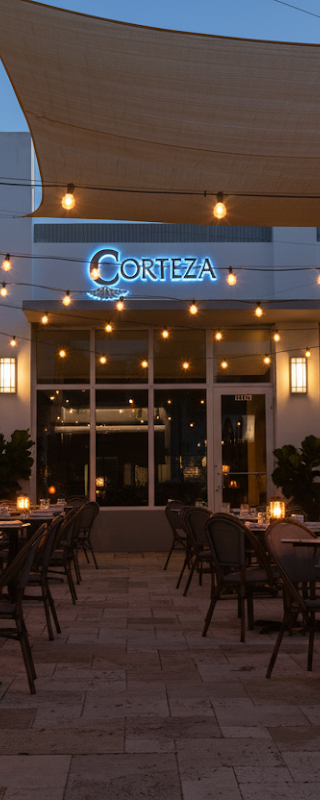
Between them they hold 916,689 Google reviews — an average of about 2,380 apiece. Nine participants sit at a perfect 5.0, but only four of those clear 250 reviews: PARI PARI Handroll Bar in Wynwood (653), E41 in Brickell (410), Mistero in Kendall (290) and Corteza in South Miami (287). The other five are all under 40 reviews.
On the Michelin side, 30 of the 70 Michelin-recognized restaurants in our directory are doing Spice this year — 43%. That's one two-star (L'Atelier de Joël Robuchon), five one-stars (Ariete, COTE, Elcielo, Le Jardinier, and Stubborn Seed, which also holds the only participating Green Star), seven Bib Gourmands and 18 Michelin Selected rooms. Those add to 31 because Michael's Genuine carries two designations. For a discount program that's a lot of guide-recognized cooking; our affordable Michelin guide covers the same territory at full price.
And one stat with no asterisk: all twelve Miami restaurants on the 2025 Top 100 Independents list are participating — Joe's Stone Crab, MILA, Komodo, Casadonna, Gekko, Makoto, Papi Steak, Pastis, Mayami, Bayshore Club, Delilah and Rusty Pelican. Every single one. If you've been curious about the restaurants that print money in this city, August is when they're cheapest.
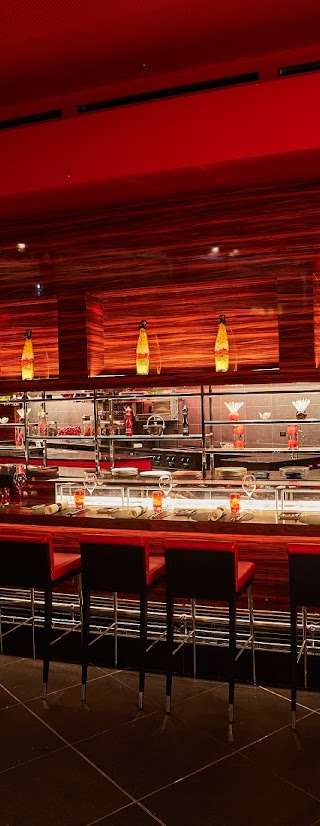
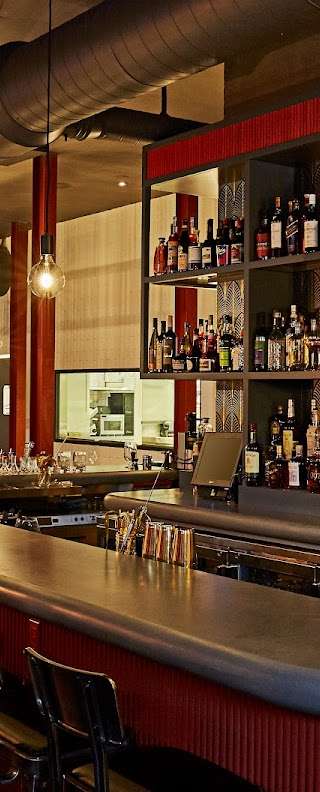
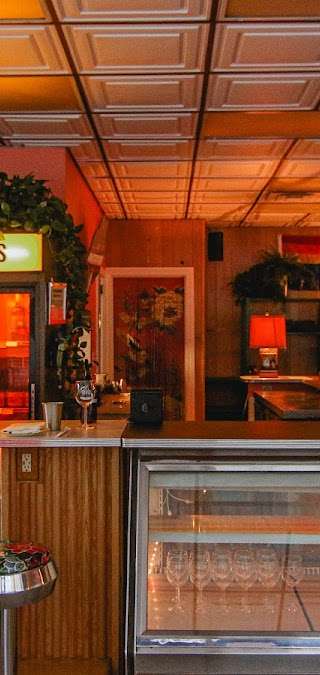
Perfect scores and Michelin stars:


The Chain Question
Sixty-four of the 390 listings — 16% — belong to a brand with more than one location on the roster. There are 22 such brands.
The biggest: La Boulangerie Boul'Mich with eight locations, Motek and Baires Grill with five each, Novecento and Bulla Gastrobar with four, and North Italia, 107 Taste, La Cabrera and Piccola Pizzeria with three apiece.
This matters for reading the headline number. When the roster goes from 379 to 389, a chunk of that isn't new restaurants joining — it's existing participants adding branches. Piccola Pizzeria went from zero locations to three this year and Boul'Mich went from five to eight. Those two brands alone add six listings against a net gain of ten.
On price, where Google has data: 134 restaurants are $$, 57 are $$$, 51 are $$$$, and exactly one is $. Google has nothing for the remaining 143. So of the roughly two-thirds we can classify, the roster skews mid-market — a useful corrective to the idea that Spice is mainly about getting into $$$$ rooms cheaply.
The Number Nobody Publishes
Here's the gap in all of this.
The GMCVB has never released an economic-impact figure for Miami Spice. No dollar value, no incremental revenue, no comparison against a control, no participant survey. It publishes how many restaurants signed up and lets you draw conclusions.
It used to publish volume, at least. The bureau's own sponsor reports show:
- 2006 — 119,980 customers served across 70 restaurants; 118,894 Spice menus
- 2008 — an estimated 150,000 menus across 103 restaurants
- 2011 — more than 158,000 meals
Then the number stops appearing, right as the program tripled in size.
Other cities still report. Charlotte published 130,000 dinners and $6 million in impact. Sonoma County published roughly 65,000 diners and $1.6 million in output. Houston Restaurant Weeks has raised more than $23 million for its food bank. Miami reports a participant count.
For a rough sense of scale: the bureau never published a 2011 participant count, but the following year it was 166. If 2011 was in that range, 158,000 meals works out to something like 950 to 1,000 Spice covers per restaurant over two months. Apply that rate to 389 restaurants and you land somewhere around 370,000 to 390,000 meals. That's an extrapolation off a fifteen-year-old ratio, not a finding — but it's the only route to a number anyone outside the bureau has.
The Short Version
389 restaurants across 38 neighborhoods, five of which hold more than half. A quarter of the list is tagged American, a fifth Italian, one in seven a steakhouse — and six are Cuban, while seventeen Haitian restaurants in our directory didn't make it at all. An average Google rating of 4.58 across 917,000 reviews, statistically indistinguishable from the rest of the city. Thirty Michelin-recognized rooms, all twelve of Miami's Top 100 Independents, and 16% of the roster belonging to a brand with another branch down the road.
Prices have doubled in 24 years, the required discount has fallen by about a quarter, and no one has published a dollar value for the program in its entire history.
If you want to know which of those 389 are new this year and which quietly disappeared, we counted that too in our 2026 versus 2025 breakdown. Miami Spice runs August 1 through September 30 — and menus, tiers and participating days all change without notice, so call ahead.